
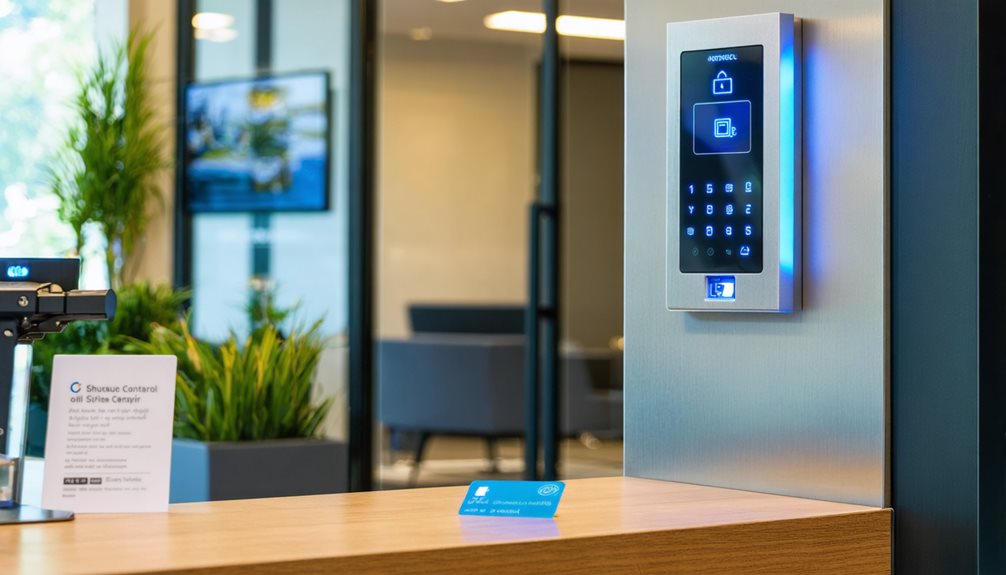
You’re seeking cost-effective access control solutions for your small business, balancing security with budget concerns. Embrace cloud-based platforms to cut upfront expenses and reduce ongoing maintenance costs. Opt for scalable systems that integrate with your current setup, offering seamless upgrades as your needs evolve. Utilize RFID technology for efficient access management without compromising security. Conduct risk assessments to tailor solutions to your specific vulnerabilities and priorities. These strategies not only enhance your premises’ safety but guarantee long-term savings. As you explore further, you’ll uncover more options to fortify your business’s security on a budget.
Key Takeaways
- Opt for cloud-based access control systems to minimize upfront and maintenance costs.
- Implement RFID technology for cost-effective, efficient access management.
- Utilize biometric systems only in high-security areas to balance cost and security.
- Choose scalable solutions to avoid frequent system overhauls as the business grows.
- Regularly update and assess security policies to maintain an effective yet budget-friendly system.
Understanding Access Control Systems
Access control systems are critical components in safeguarding your business premises, ensuring only authorized personnel gain entry. To effectively secure your space, you need to understand the various access control solutions available. Biometric technology and RFID systems are two prevalent options that can enhance security while streamlining access management.
Biometric technology uses unique physical characteristics, such as fingerprints or retinal scans, to verify identity. It’s highly secure, as these traits are difficult to replicate or steal. Implementing biometric access can considerably reduce unauthorized entry risks, making it an attractive option for businesses prioritizing security.
RFID systems, on the other hand, offer a balance between security and convenience. These systems use radio frequency identification to communicate between an access card or fob and the reader. They’re efficient for environments requiring quick, seamless access, such as offices with high traffic. RFID systems are scalable, allowing you to easily expand or modify access controls as your business grows.
Evaluating Cost-Effective Options
While understanding the types of access control systems is paramount, evaluating their cost-effectiveness is equally important for businesses aiming to optimize their security budgets. You need to identify budget-friendly technologies that align with your specific needs. Begin by conducting a thorough risk assessment. This will help you pinpoint vulnerabilities within your premises and prioritize areas requiring immediate attention. Your choice of access control should reflect a balance between cost and the level of security necessary.
Consider the following when evaluating cost-effective options:
- Initial Investment vs. Long-Term Savings: Analyze upfront costs against potential long-term savings. A system with a higher initial outlay might offer significant savings in maintenance and scalability, making it more budget-friendly over time.
- Integration with Existing Infrastructure: Verify the new system can seamlessly integrate with your current setup. This avoids unnecessary expenditure on additional components and reduces implementation challenges.
- Scalability and Flexibility: Choose technologies that can adapt to your business’s growth and evolving security needs. A scalable solution minimizes future costs, as it can expand without requiring a complete overhaul.
Implementing Scalable Solutions
Implementing scalable solutions is vital for businesses seeking to future-proof their access control systems. By leveraging cloud integration, you can guarantee your system grows alongside your business needs. Cloud-based platforms offer flexibility, allowing you to add or remove users easily, update permissions, and manage access points without significant infrastructure changes.
Remote management is another significant component of scalable access control solutions. With remote management capabilities, you gain the ability to oversee your systems from anywhere, using a smartphone or computer. This not only streamlines operations but also provides real-time insights into access activities, enabling quicker response times to potential security incidents. Integrating remote management into your access control system means you can adjust settings and troubleshoot issues without being physically present on the premises.
When selecting a scalable solution, consider systems that offer seamless cloud integration and robust remote management features. Verify the platform supports easy upgrades and expansions, allowing you to tailor it to your evolving business requirements. By prioritizing scalability, you’ll create an access control system that’s both cost-effective and capable of meeting future demands.
Enhancing Security on a Budget
Many businesses seek to enhance their security systems without breaking the bank, and achieving this balance requires strategic planning and smart investments. To optimize your security on a budget, consider leveraging budget friendly technology. Modern advancements offer affordable, scalable solutions that can be tailored to your needs. For instance, cloud-based access control systems eliminate the need for expensive on-site servers, reducing both initial and maintenance costs.
A thorough approach also involves investing in security awareness training for your employees. This type of training not only empowers your team to recognize and mitigate risks but also enhances overall security posture. Educating your staff can prevent costly breaches and guarantee everyone is aligned with your security protocols.
To enhance your security on a budget, consider these strategies:
- Adopt budget friendly technology: Use cloud-based systems to lower upfront and operational costs.
- Implement security awareness training: Educate employees to reduce human error and strengthen security culture.
- Regularly assess and update policies: Conduct periodic reviews to guarantee your security measures remain effective and cost-efficient.
Frequently Asked Questions
How Do I Choose the Right Access Control Provider for My Business?
Evaluate the provider’s reputation by researching customer reviews and industry ratings. Ascertain the system’s scalability matches your growth projections. Choose a provider offering robust support and customizable solutions to align with your business’s evolving security needs.
Can Access Control Systems Integrate With Existing Security Infrastructure?
Yes, they can. You’ll need to assess system compatibility first. Proper integration benefits include streamlined operations and enhanced security. Evaluate your current setup’s compatibility with new systems to guarantee seamless integration and maximize return on investment.
What Are the Maintenance Requirements for Access Control Systems?
You should prioritize system upkeep by scheduling routine inspections. Regularly update software and firmware, check hardware for wear, and guarantee all components function correctly. This proactive approach minimizes downtime and extends the lifespan of your access control system.
Are There Legal Considerations for Implementing Access Control in a Workplace?
When implementing access control, you must consider privacy regulations and obtain employee consent. Ascertain compliance with data protection laws to avoid legal issues. Regularly update policies and train staff on their rights and responsibilities regarding access control systems.
How Do Access Control Systems Handle Power Outages or Technical Failures?
You should guarantee your access control system has power backup and system redundancy. This setup maintains security during power outages or technical failures, preventing unauthorized access and guaranteeing continuous operation. Regularly test these systems for reliability.


